Branxton Cement Menagerie
“Outsider Art” is a term that refers to an individual who is self-taught, untrained and untutored, creating art with little or no contact with the art world (thanks Wikipedia). I first came across it when I was a student of ecology and hanging around with Edinburgh art college students; we took a trip to Pittenweem where (I think - this was about 25 years ago) Joyce Laing, an art therapist working at Barlinnie Prison, and a collector of Outsider Art, was based, and we went to see an exhibition of work. It was fascinating, and I must have done a bit of research and found out about Branxton Cement Menagerie, near Flodden Field.
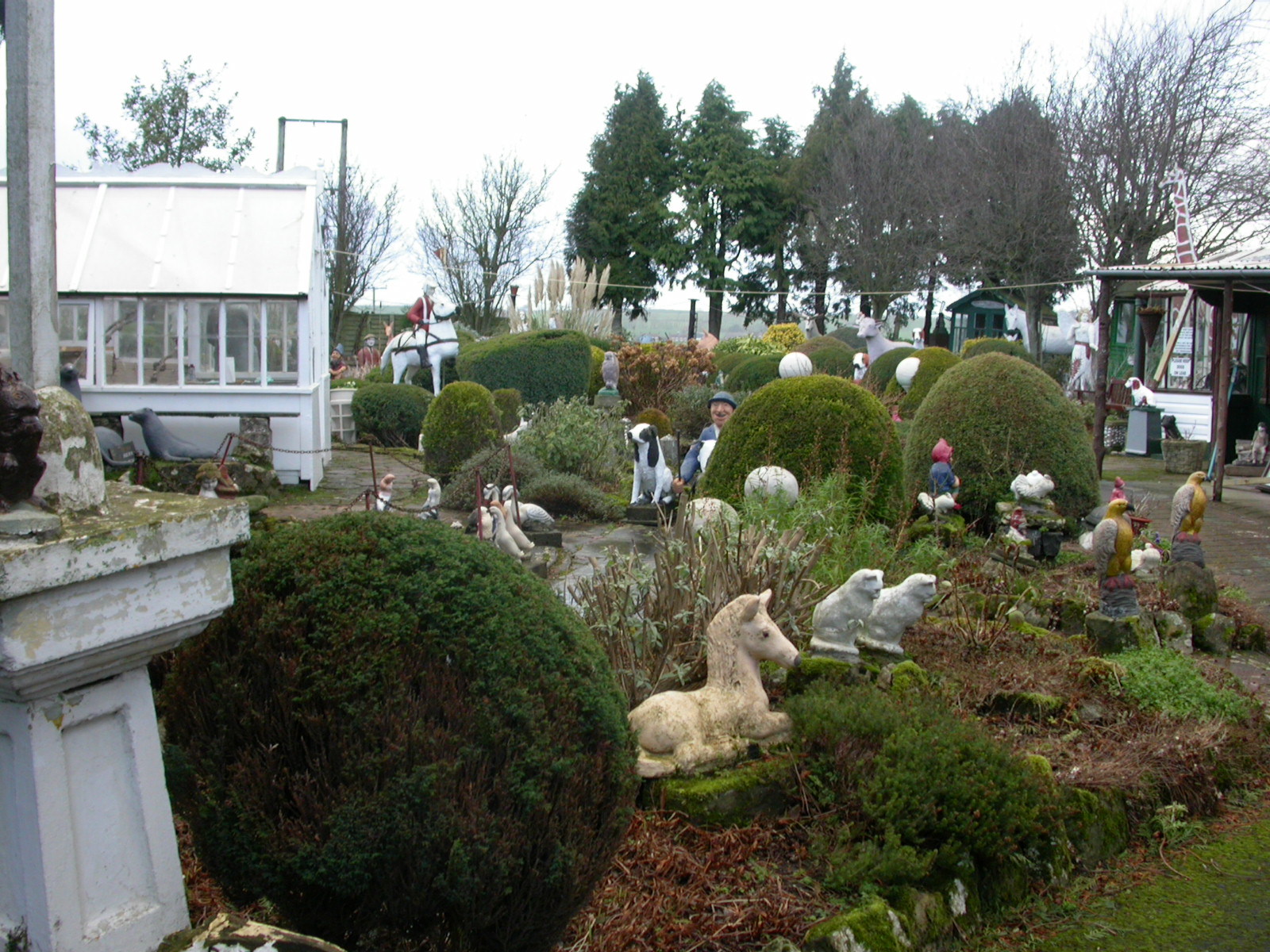 |
Here, in the 1960s, John Fairnington created some cement sculptures of animals and characters in the garden of their bungalow, to entertain his disabled son Edwin. Edwin sadly passed away in 1971, John himself passing away in 1981, but the bungalow and the garden stayed in the posession of relatives, occasionally formally opening to the public but mostly (like when I visited in 2007) just involved wandering around someone’s garden, unsure if you were allowed to be there or not.
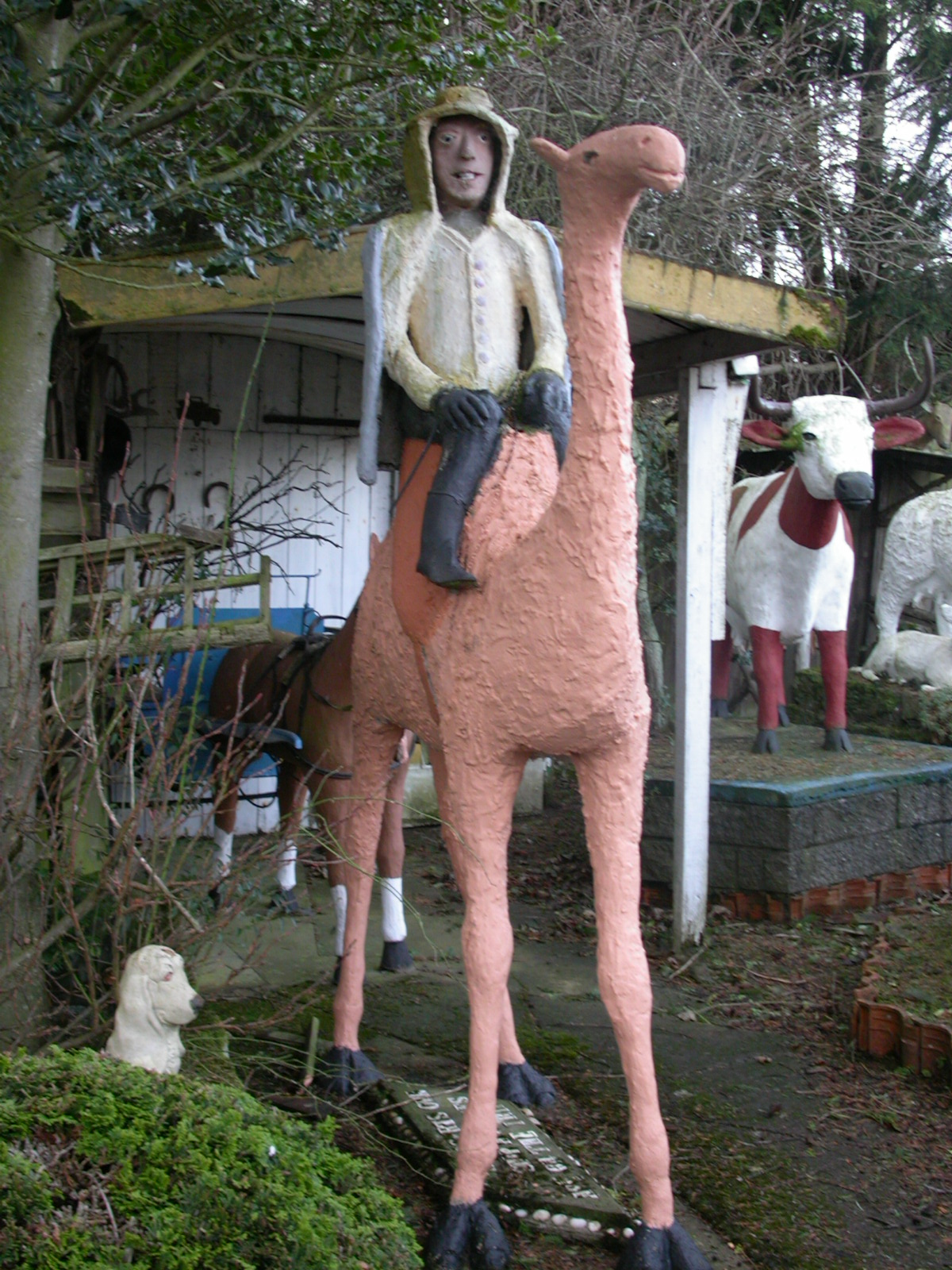 |
An incredible place, everywhere you turned there was an astonishing and delightful statue of something unexpected. Even in 2007 I was surprised it was still standing, and thought surely at some point the bungalow will be sold and the statues chucked in a skip.
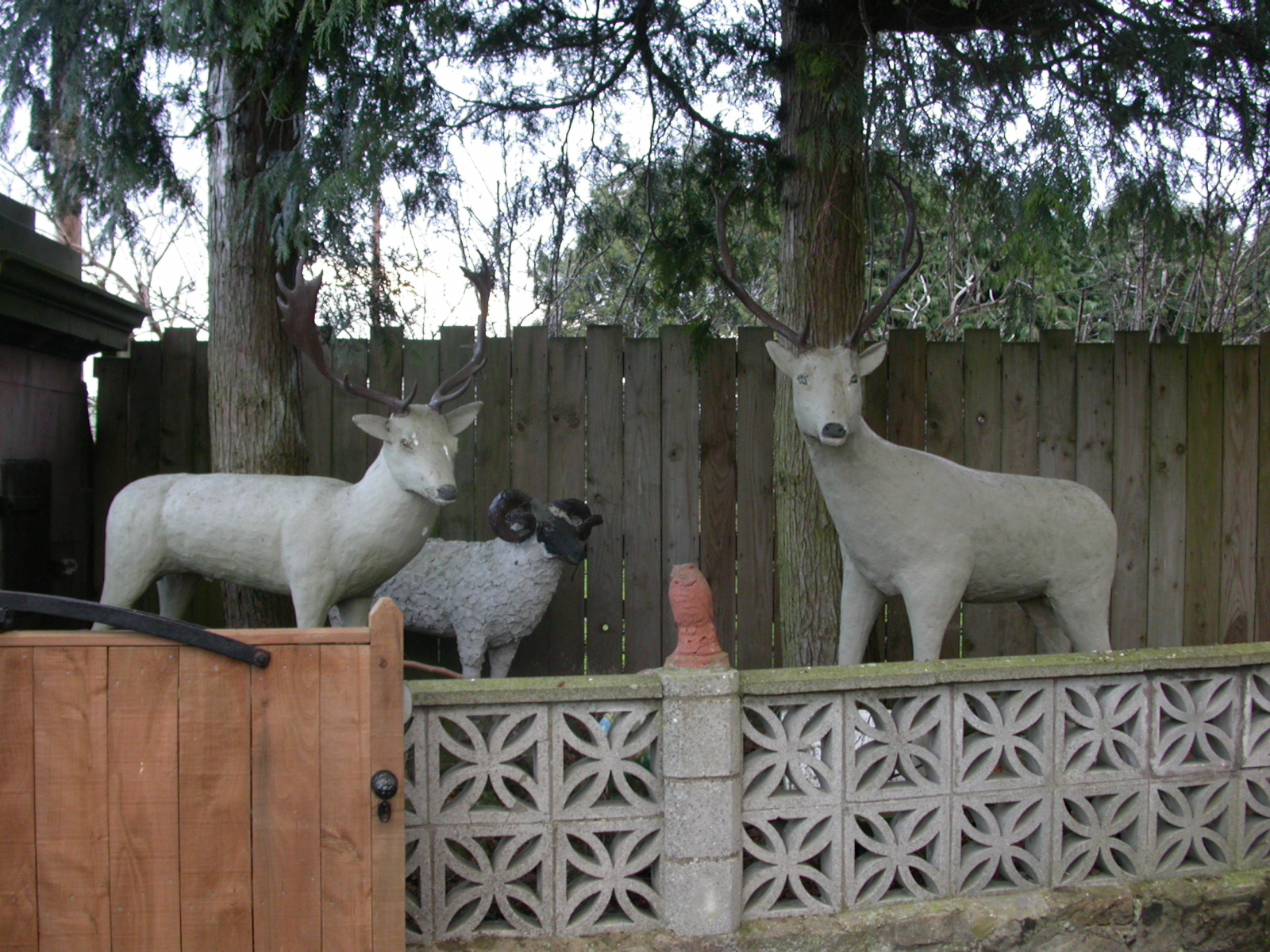 |
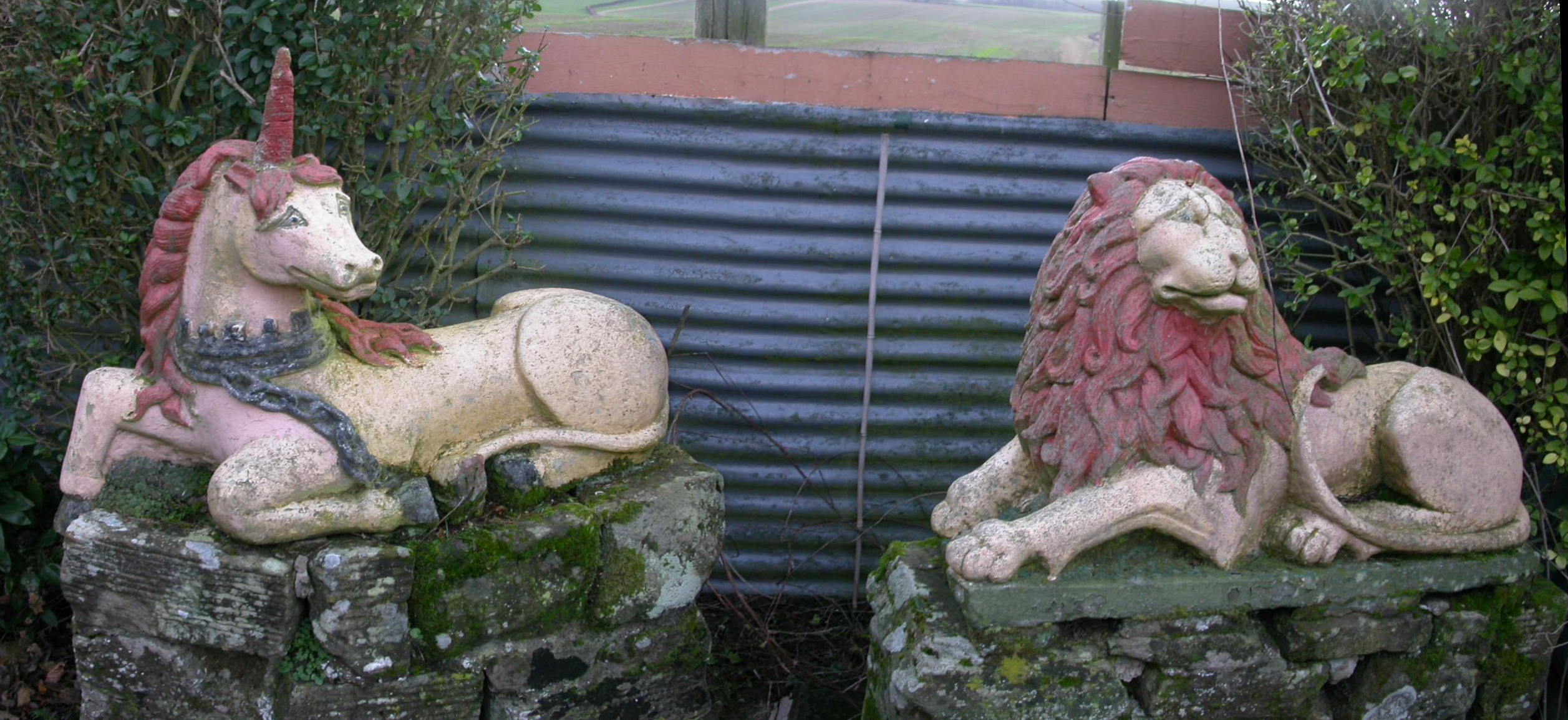 |
The garden is not far from the border here. Next to these fierce heraldic beasts of England and Scotland was a poem:
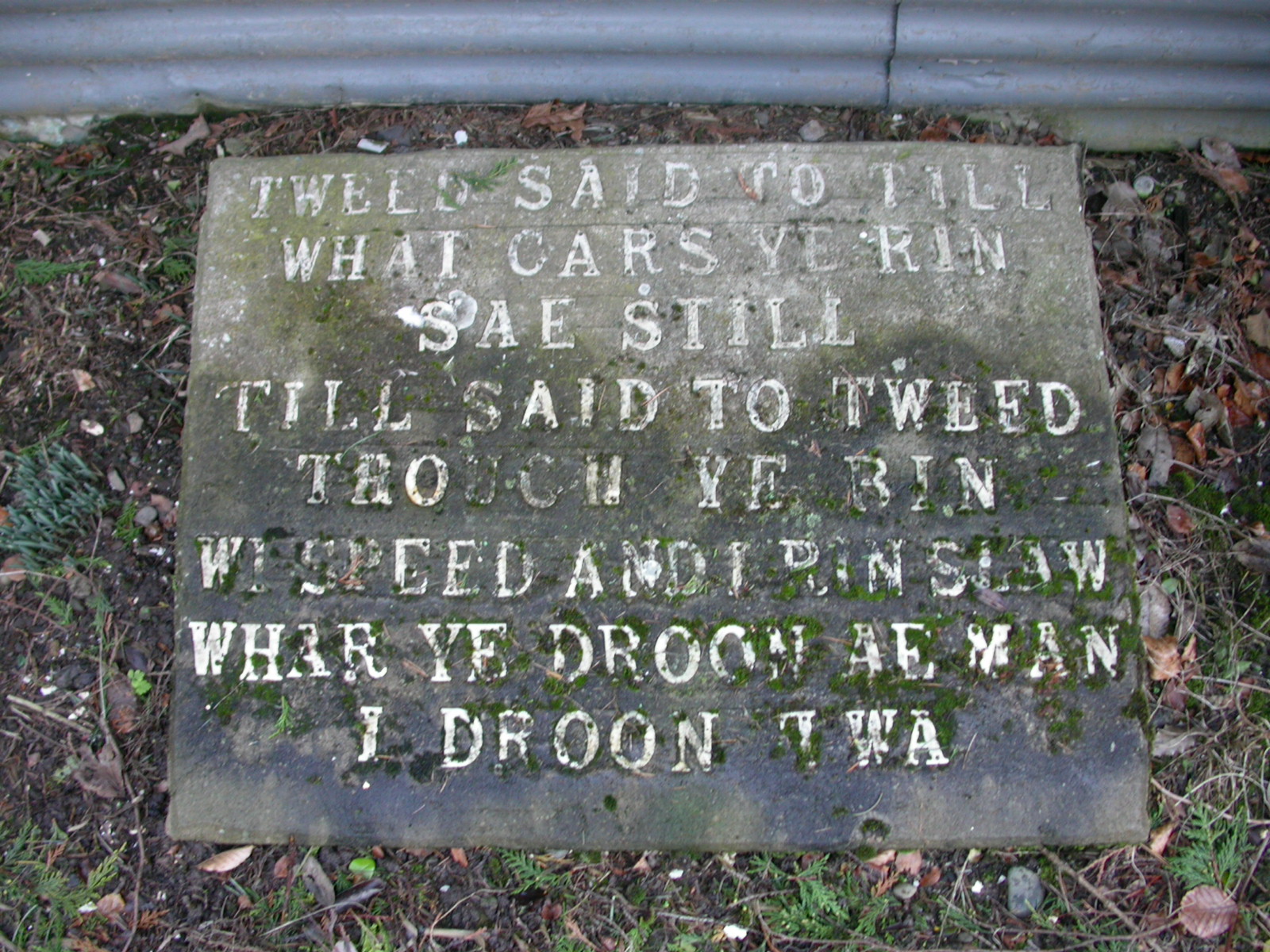 |
Tweed said to Till,
What cars ye rin sae still?
Till said to Tweed
Though ye bin
wi speed and I rin slaw
Whar ye droon ae man
I droon twa
For some reason I was thinking about this place the other day, and had a look for it on google maps, and - unsurprisingly, after 65 years, I thought - could see not trace of Branxton Cement Menagerie. Looked like it had finally succumbed.
However, searching online, I was delighted to see it had not been destroyed but sold at auction to Ayton Castle in 2021.
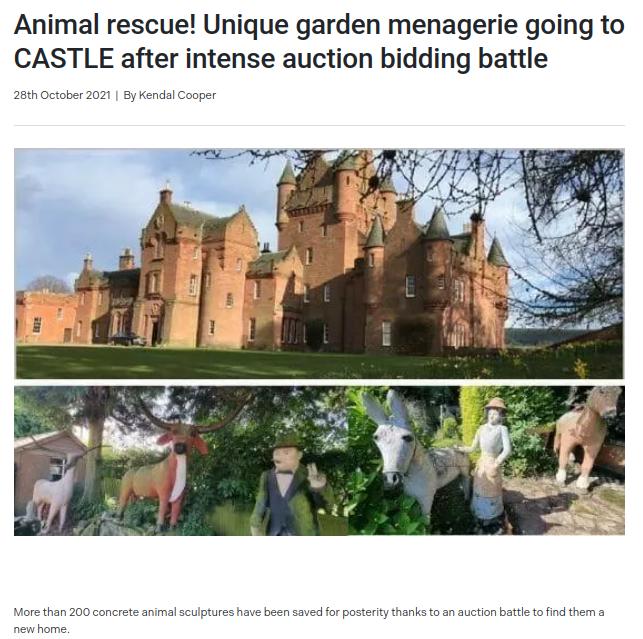 |
Wonderful! The collection has been kept together and would still be on public display.
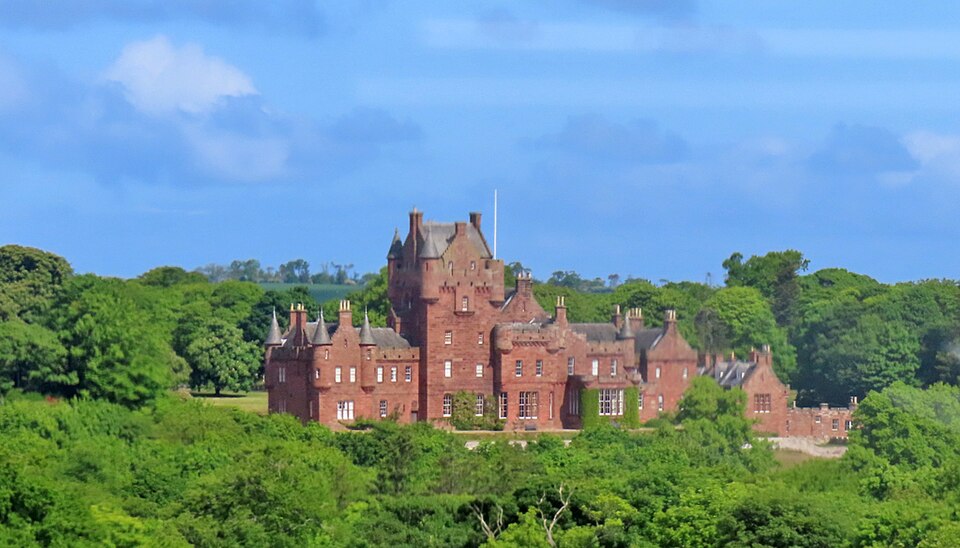 |
| Ayton Castle by Anne Burgess |
Ayton Castle dates from the 1400s, rebuilt in the Scottish Baronial style in the 1800s, changed hands many times until being bought by a property developer in 2015. It was ran as a tourist attraction with a miniture railway but the website made no mention of the Cement Menagerie, and seemed a little outdated…
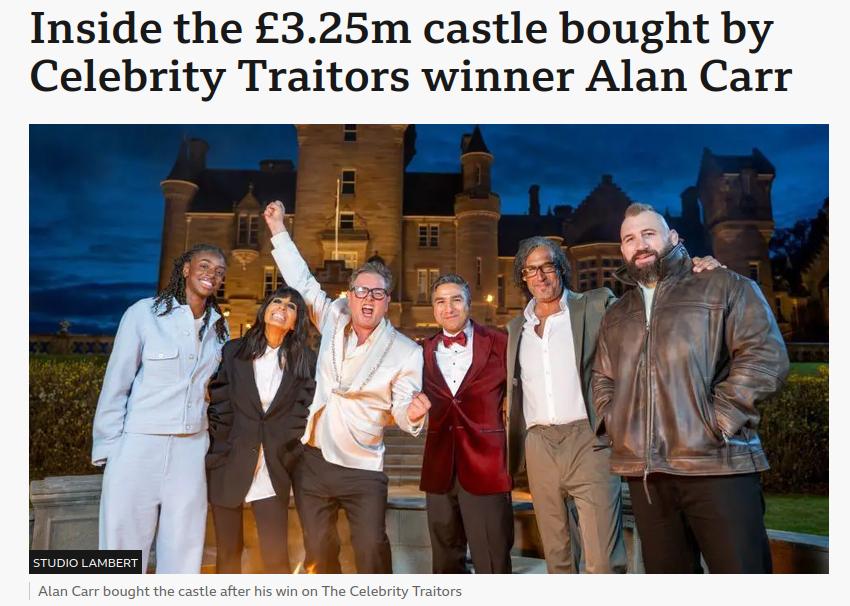
Because Allan Carr had bought Ayton Castle earlier this year:
 |
As much as I like the idea that the estate was bankrupted by spending £20,000 on some cement animals, I couldn’t find out what the story was behind the sale, but in July this year the collection was broken up and sold off at auction, at Railton’s Auction house, which isn’t far from me and I was very disappointed to miss the chance to buy a piece of this history. Certainly I think the auctioneers didn’t really know what to make of them.
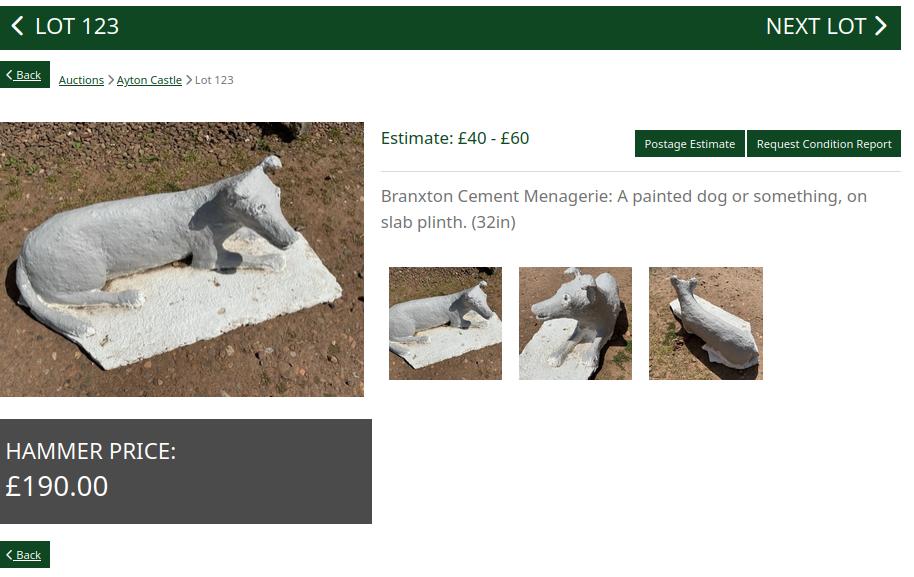 |
There’s plenty online about the Cement Menagerie:
Although the garden no longer exists, and the collection broken up, I feel like at least this is better than the whole lot just being destroyed and lost forever. Hopefully at least some (if not all - who else would buy them?) of the pieces ended up with people who know and appreciate the history of the Branxton Cement Menagerie.
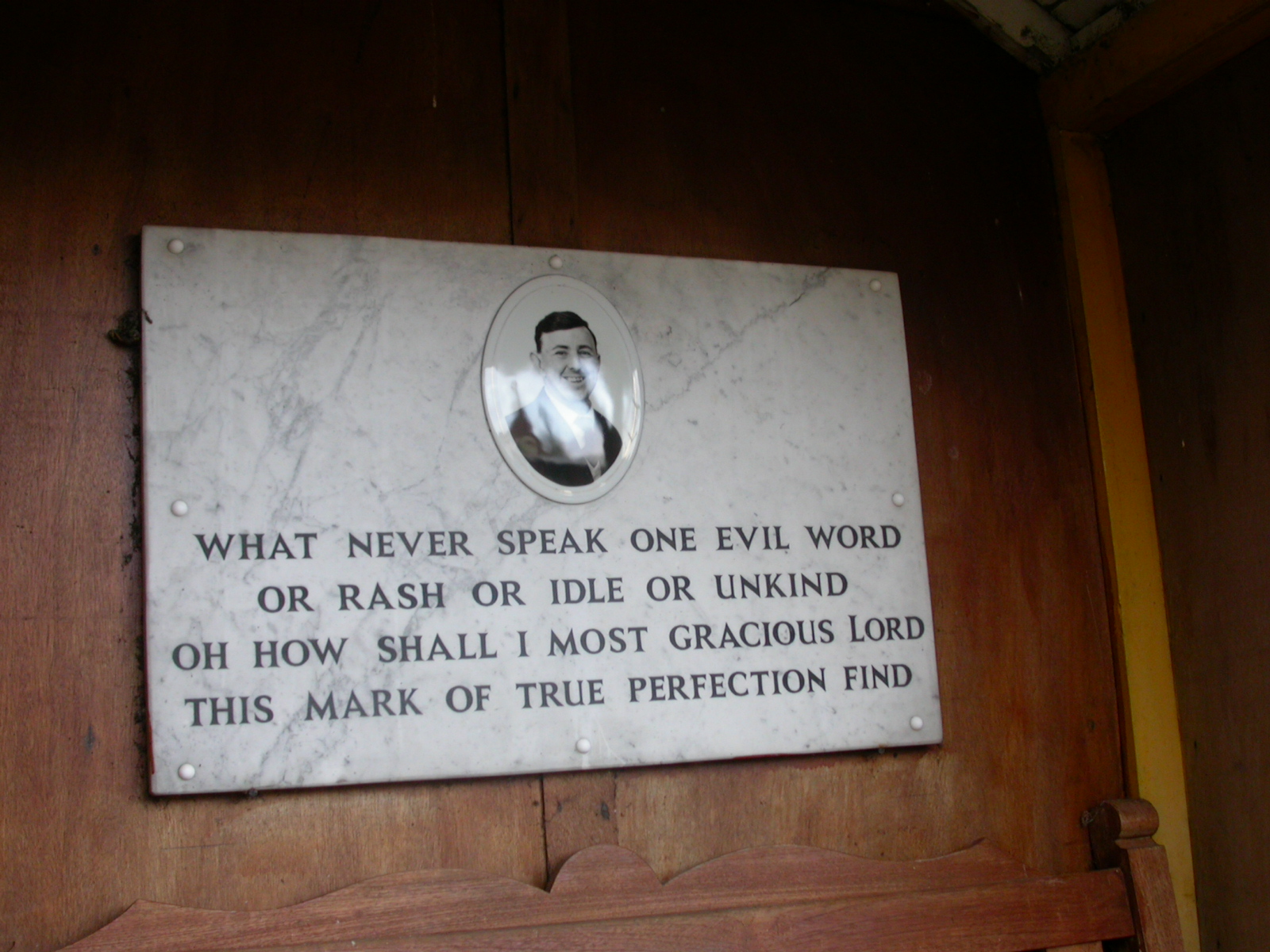 |
What never speak one evil word
Or rash or idle or unkind
Oh how shall I most gracious lord
This mark of true perfection find